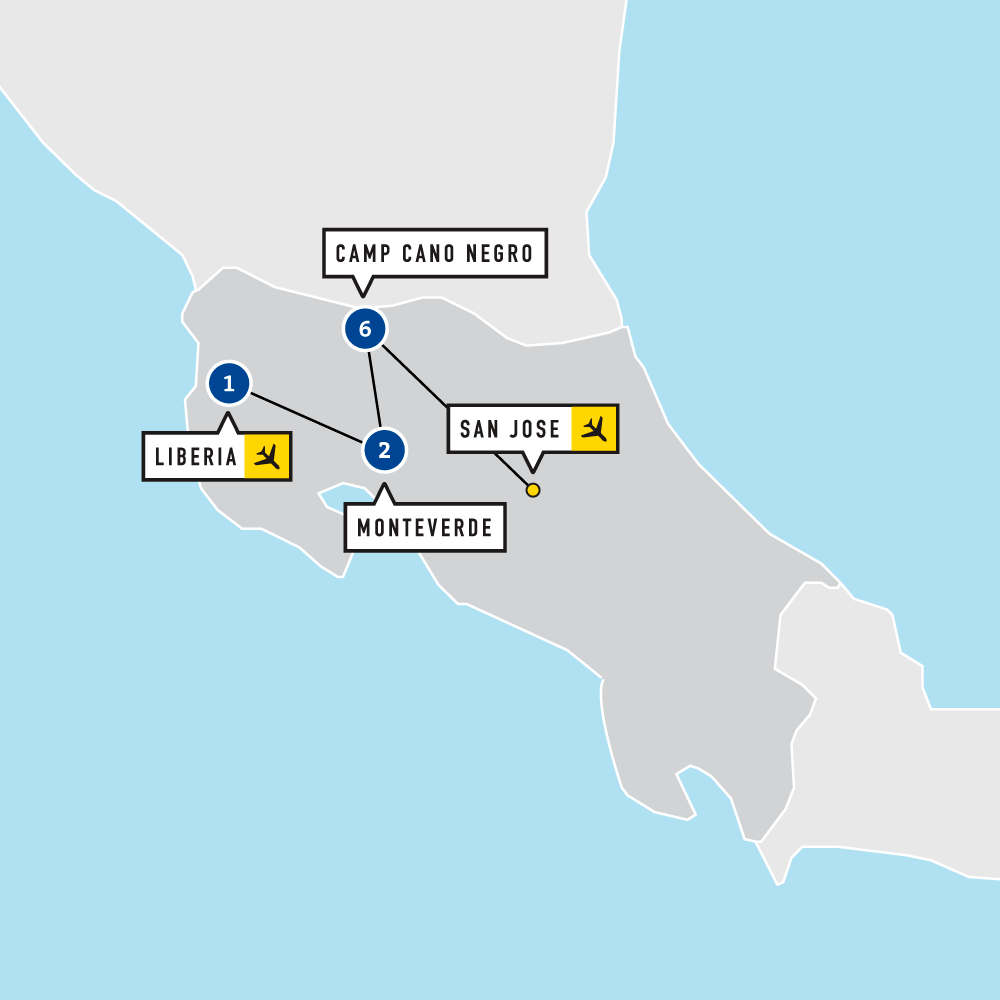
-Day 1 Hola Camp Caño Negro
Details: Meet Camps International staff and transfer to Camp Caño Negro
On arrival in San Jose, Camps International Staff will meet you at the airport and transfer you straight to Camp Caño Negro.
Details: Daily reflection and group discussion
"We do not learn from experience, we learn from reflecting on experience" - John Dewey
On every evening of the program, we will set time aside to update our Reflection Journal and share thoughts and impressions that have come to the fore in the course of the day.
Day 2 Camp Caño Negro
Tortilla-making class
Details: Camp Caño Negro orientation
Our home for the week will be our permanent camp on the shores of the wetlands themselves: on the boundary of two sides of the camp is water, which means wildlife spotting starts from inside the camp. Sleeping is in wooden buildings with bunkbeds and there are social spaces for eating, hanging out and for use as a classroom.
All activities in camp, be they domestic life or conservation work, can be run in Spanish or English. Through formal or informal sessions, the group can work in subject or activity focused language acquisition modules, and then apply their learning to the real-life situations that they face during the week. In the case of the Camp Caño Negro, this can be focused particularly on the activities planned for later in the expedition in Monteverde.
Your evenings are usually spent relaxing in camp and the local kitchen crew will rustle up a delicious dinner for you and your team. After dinner, there are plenty of opportunities for group discussion, reflections on project work, keeping travel diaries up to date, as well as various team led games and activities. Local staff are always in camp and are on hand to chat to and help you with anything else that you need.
Details: Introduction to the community project
Today we start our service project work at the camp. Students will work in small teams to achieve various different elements of the current projects. The service work elements that the group will be involved in with could include:
Megafauna - using camera traps to locate megafauna species, identifying them and marking the location of the trap.
Establishing boundary markers to ensure that the land under the protection of SINAC is clearly defined and therefore not encroached upon by farming, which is an important part of the work of conservation in the area.
Beehive making – to help in the protection of bees we are working with apiarists in the area to build beehives. Bee numbers are under threat across the world and their role in pollinating plants is therefore at risk.
Reforestation and the planting of saplings.
Day 3 Camp Caño Negro
Sustainable Development Goals (SDGs) group discussion
Details: Caño Negro Reserve boat tour
Take a boat trip through the waterways of the national park. The Caño Negro Reserve stretches across the border with Nicaragua and is one of the most important migratory bird sites on earth. Alongside myriad bird species, it is also home to sloths, caiman, monkeys and tapir among many other animals.
Details: Lecture with SINAC (National System of Conservation Areas)
The camp is situated on the edge of the Caño Negro Refugio, run by SINAC the Costa Rica national parks authority. This is one of the most important wetland reserves for migratory birds in the world.
The group starts by thinking deeply about their goals for the week, in a framed, student led discussion forum. In Camp Caño Negro we are working under the direction of government rangers, who will visit the camp to explain their work. An important part of the process of identifying the group’s goals is a broader understanding of the problems faced in the area, the work of SINAC across the country and that organization's long-term aims. Through that understanding, leading to goal identification and student led planning, the group start to create and then work towards their own objectives.
Details: Student-led evening group discussion
This evening, we will have a student focused discussion of Leadership, its challenges, models and aims. The students will be asked to think about these issues particularly in the context of their current environment and activities. What has worked, what hasn't? Are we on schedule for our own aims? How could we do things differently?
Day 4 Camp Caño Negro
Night walk in the refuge
Details: Continue the community project
Continue working in small teams on long-term projects started, not only by your group, but by many other groups over the course of the time Camps International and WorldStrides has been working with the community. Learn from project leaders, who are experts in infrastructure – our purpose to not only use our hands for good work but also take back the knowledge of this project work to be used in our own community at home. Bring some gloves and clothes you can get dirty!
Details: Afternoon soccer match with the community
An afternoon soccer match with the community or a session with a local women’s group understanding the work they are doing in conserving their culture and in preserving the natural environment.
Details: Student-led evening group discussion
This evening, we will have a student focused discussion of Leadership, its challenges, models and aims. The students will be asked to think about these issues particularly in the context of their current environment and activities. What has worked, what hasn't? Are we on schedule for our own aims? How could we do things differently?
Day 5 Camp Caño Negro
Group session on fair trade and environmental impacts
Details: Continue the community project
Continue working in small teams on long-term projects started, not only by your group, but by many other groups over the course of the time Camps International and WorldStrides has been working with the community. Learn from project leaders, who are experts in infrastructure – our purpose to not only use our hands for good work but also take back the knowledge of this project work to be used in our own community at home. Bring some gloves and clothes you can get dirty!
Details: Student-led evening group discussion
The group then has some time to think deeply about their goals for the week; in a framed, student led discussion forum. In the camps, we are working in collaboration with the surrounding community and an important part of the process of identifying the group's goals is a broader understanding of the problems faced by the area and our combined aims in tackling them. Through that understanding, leading to goal identification and student led planning, the group start to create and then work towards their own objectives.
Day 6 Camp Caño Negro
Complete community project
Local school visit
Traditional dance class
Campfire evening
Day 7 Camp Caño Negro--Monteverde
Travel to Monteverde via Arenal
Mistico Hanging Bridges visit
Details: Group discussion and lectures
Camps has a series of interactive lectures, that cover subjects such as Stakeholder Engagement, Citizen Science and Threats to Biodiversity. These sessions can be run following discussion with the school of the topics considered most appropriate to the group.
Day 8 Monteverde
Details: Canopy zipline tour
Soar through the treetops for the unmatched close-up of the New World’s best wildlife refuge. Harness yourself to cables that run between platforms high in the trees, then step into thin air and zip from tree to tree. Experience a true bird-eye view from your new aerial perspective. For safety reasons, weight restrictions apply to this activity.
Details: Coffee plantation visit
Head to a coffee plantation in Monteverde to learn about the importance of coffee in Costa Rican culture and economy. See where the beans are grown, how they are harvested and roasted and then enjoy your own steaming cup at the end of the tour.
Details: Final reflection and group discussion
This evening we make the final entries in our Reflection Journal and share some of the most
significant observations and perspectives that have taken shape in the course of our travel
experience and how these may be most relevant for us all as we return home.
Day 9 Flight home from Liberia
Tour Includes:
- Round-trip airfare
- Three healthy, well balanced and tasty meals a day, and access to clean drinking water
- Accommodation in cabins with bunk beds, flushing toilets and shower while at Camp
- Transportation by private coach for airport and activity transfers
- All activities listed in the itinerary and all project costs & materials
- Camp orientation & costs associated with service learning projects
- Camp orientation & language lessons
- In-country support from dedicated local team and 24-hour emergency support
- Full time Camps International Staff and/or Project Coordinator with the group 24/7
- Up to three college credits upon course completion (grades 9-12) or high school credit (grades 6-12) for U.S. travelers only.
- Note: On arrival day only dinner is provided; on departure day, only breakfast is provided
- Note: Tour cost does not include airline-imposed baggage fees, or fees for any required passport or visa. Optional excursions, optional pre-paid Tour Director and multi-day bus driver tipping, among other individual and group customizations will be listed as separate line items in the total trip cost, if included.

Loading...